
Guide · Gua sha & cupping
Gua sha vs cupping: which one belongs on your back this visit?
Gua sha vs cupping explained by a licensed NC acupuncturist. Marks, neck vs back, contraindications, and when Susanna Yeung uses both in Indian Trail.
Written by Susanna Yeung, L.Ac., NCCAOM board-certified. Educational — not a treatment plan.
Charlotte-metro searches treat gua sha and cupping as the same Instagram bruise. They are not. Cupping is suction. Gua sha is a tool stroke. Both can raise sha. Both can be the wrong tool for your pattern. This is how Susanna Yeung, L.Ac., actually chooses at 6580 Old Monroe Road — not a spa menu.
The mechanical difference, in one minute
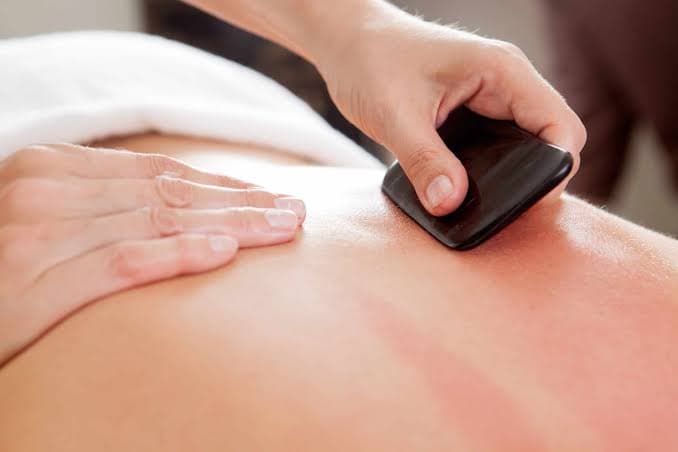
Cupping places a cup on relatively flat muscle and creates negative pressure so skin and superficial tissue lift into the cup. Static cups stay; gliding cups move on oil. Gua sha uses a smooth-edged instrument — historically horn or stone, clinically often stainless — stroked along a channel or bony contour until petechiae appear. If your pain lives on the neck, scapular border, or occiput, a cup often will not sit. That is when scraping earns the visit. If the problem is a broad trapezius slab from US-74 or a warehouse shift, cups usually win first.
What the marks mean (and what they do not)
Neither mark is a traumatic bruise from a fall. Both are petechiae from moving stagnant Blood toward the surface. Darker, slower-to-fade marks often mean more stagnation or Heat; pale-pink that vanishes overnight often means less. Marks are not a score. A faint session can still be the right dose for deficient tissue. We do not chase purple for photos.
When we refuse both
Fever, broken skin, certain anticoagulants, active infection, and some stages of pregnancy change the plan — often to needles only, or to a medical referral. Kidney-deficient empty Heat with a thin pulse and little stagnation is a common reason gua sha is skipped even when you asked for it. That is diagnosis. It is also why this clinic will not sell “add cups” at checkout.
What Indian Trail patients actually book
A locked neck after AC + desk: gua sha, often with distal acupuncture. Broad upper-back armor after a long I-485 week: cups, then needles. Migraine with cervical trigger: gua sha along the occipital shelf is more useful than a lumbar cup. Facial jade rollers are a different service; we are not a Rea Road facial bar. If you want clinical gua sha, say so at the free consult so we screen the tissue, not the trend.
How this sits next to acupuncture
Needles regulate the system. Cups and gua sha treat a region. Most first-series visits here are acupuncture plus one adjunct when the pattern supports it — not three modalities stacked for a higher ticket. Frequency still follows chronicity; see the session-count guide. Fees are discussed at booking; the NC cost guide covers typical ranges and insurance receipts.
Frequently asked questions
Is gua sha the same as cupping?
No. Cupping is suction on broader muscle. Gua sha is a tool along contours such as the neck. Both can leave sha. The choice is diagnostic.
Can I get both in one visit?
Often yes — different regions, or cups then a short scrape. Not automatically. Tissue and pattern decide.
How long do marks last?
Typically two to seven days. Cups on thick muscle may last longer than light cervical gua sha. Plan collars and photos accordingly.
Do you offer facial gua sha or wet cupping?
Clinical body gua sha and dry (sometimes fire-vacuum) cupping. Wet cupping is not a recreational service here. Cosmetic facial gua sha is a different category — ask at consult.