
Service
Gua sha in Indian Trail, NC — clinical scraping, not a facial trend
Gua sha in Indian Trail, NC by Susanna Yeung, L.Ac. Clinical scraping for neck pain and headaches — not facial spa tools. Sha marks explained. Free consult.
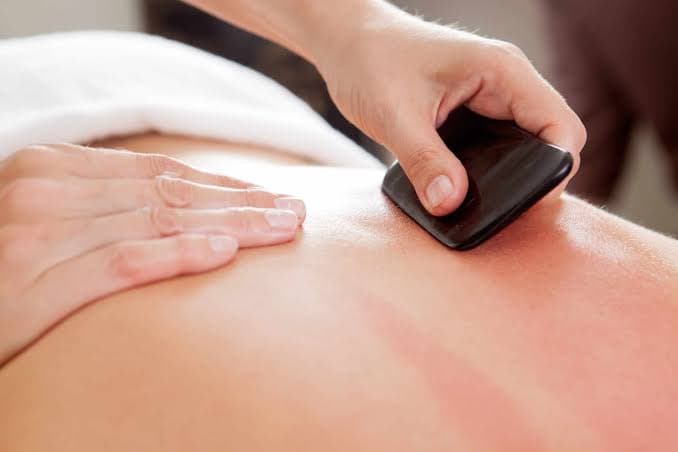
“Gua sha near me” usually means two different things. One is a jade or rose-quartz facial tool sold for glow. The other is a Traditional Chinese Medicine method: a smooth-edged instrument stroked across oiled skin until therapeutic petechiae — sha — appear. Superior Traditional Acupuncture on Old Monroe Road in Indian Trail offers the second. Susanna Yeung, L.Ac., NCCAOM board-certified, uses gua sha when tongue and pulse show Blood stasis, Wind-Cold lodging in the muscular layer, or myofascial holding that needles alone will not shear.
People from Indian Trail, Matthews, Waxhaw, Stallings, and south Charlotte often arrive after a spa facial did nothing for a locked neck. Clinical body gua sha is firmer, diagnostic, and screened. Open wounds, fever, fragile skin, and some anticoagulant regimens are reasons to skip it. Empty Heat with little stagnation is another. If Instagram asked for gua sha and your pattern does not support it, she will say no. That refusal is the difference between a licensed visit and a menu.
Sha is not a bruise from blunt trauma. It is petechiae from deliberately moving stagnant Blood toward the surface. Color and how fast it fades tell us something about Heat versus Cold and how stuck the tissue was. Marks typically last two to five days. Wear a collar you can live with. Hydrate. Keep the area warm. Cold wind on freshly scraped upper back is a classic way to feel worse the next morning.
Gua sha and cupping are not interchangeable. Cups cover broad, relatively flat muscle — trapezius, lumbar, flanks. Gua sha follows bony contours: cervical facets, scapular borders, the occipital shelf where desk-and-commute headaches live. Many Indian Trail visits use both in the same hour — needles for systemic regulation, then cups or scraping for the layer that is actually stuck. Nielsen and colleagues have published work on gua sha and microcirculation; we treat that as supporting context, not a promise that your neck will match a study population.
Needle-hesitant patients sometimes start here. That is allowed when the pattern allows. It is not a forever workaround if Heart-Kidney insomnia or a Liver-Qi migraine still needs points. Session time for regional gua sha is usually ten to twenty minutes after intake. Instruments are cleaned to Clean Needle Technique hygiene standards. You can combine this visit with acupuncture; you do not have to.
If you searched “gua sha Indian Trail NC” or “gua sha Waxhaw NC,” you are not looking for a facial bar. You are looking for someone who will look at your tongue, check contraindications, and decide whether sha should appear on this body today. A plain-language comparison of gua sha vs cupping — marks, neck vs back, when we refuse both — is on the clinic guide.
Benefits
- Rapidly releases neck, shoulder, and upper-back stagnation causing headache and limited rotation
- Reduces local inflammation and improves microcirculation per clinical and research observations
- Clears exterior Wind-Cold patterns associated with chills, stiffness, and early illness recovery
- Complements cupping and acupuncture for layered musculoskeletal pain
- Offers needle-free entry point for patients new to Traditional Chinese Medicine when appropriate
- Provides diagnostic feedback through sha coloration guiding subsequent TCM treatment
- Clear distinction between clinical body gua sha and cosmetic facial gua sha trends
What to expect
- Skin inspection and pattern assessment before selecting gua sha planes and pressure
- Application of therapeutic oil; smooth-edge strokes along meridian pathways or affected muscle groups
- Gradual emergence of sha — pink to red discoloration — with patient feedback on comfort
- Session duration typically ten to twenty minutes for regional work
- Post-care advice: warmth, hydration, and avoiding cold wind on treated areas
- Integration with acupuncture or cupping in same visit when full pattern warrants combined release
Frequently asked questions
Is gua sha painful?
Pressure is firm but controlled — not excruciating scraping. Most patients tolerate gua sha well and feel relief as tissues release; Susanna adjusts intensity to your sensitivity and constitution.
Do you do facial gua sha?
Susanna focuses on clinical body gua sha for pain, Wind invasion, and fascial stagnation. Light cosmetic facial gua sha is a different service category; ask at consult if a modified approach is appropriate for your goals.
How long does sha discoloration last?
Sha typically fades within two to five days. Lighter pink sha often clears faster; deeper stagnation may present darker marks that take slightly longer.
When is gua sha better than cupping?
Gua sha excels along bony contours and neck regions; cupping covers broad flat muscle planes. Susanna chooses based on pattern, anatomy, and whether exterior pathogenic factors dominate.
Is gua sha the same as cupping?
No. Cupping uses suction on broader muscle planes. Gua sha uses a tool along contours such as the neck. Susanna chooses based on pattern and anatomy — often both in one visit.
Can anyone perform gua sha at home?
Professional gua sha requires TCM training to avoid tissue damage and recognize contraindications. Clinical gua sha at a licensed practice differs from casual tool use without diagnosis.