Service
Cupping Therapy Near Indian Trail — Clinical TCM, Not Spa Theatrics
Cupping therapy in Indian Trail, NC — licensed TCM suction for back, neck, and shoulder tension. Short drive from Charlotte, Matthews, and Ballantyne. Marks explained. Free consult.
People searching “cupping near me” or “cupping therapy near me” usually want two things: real relief for back, neck, and shoulder tension, and a practitioner who understands when suction helps — and when it does not. At Superior Traditional Acupuncture in Indian Trail, Susanna Yeung delivers clinical cupping inside Traditional Chinese Medicine diagnosis, not as a stand-alone spa add-on. That distinction matters across the Charlotte metro: Union County athletes, Monroe shift workers, Matthews commuters, and Ballantyne professionals all arrive with fascial armor that responds when stagnation is drawn toward the surface and cleared.
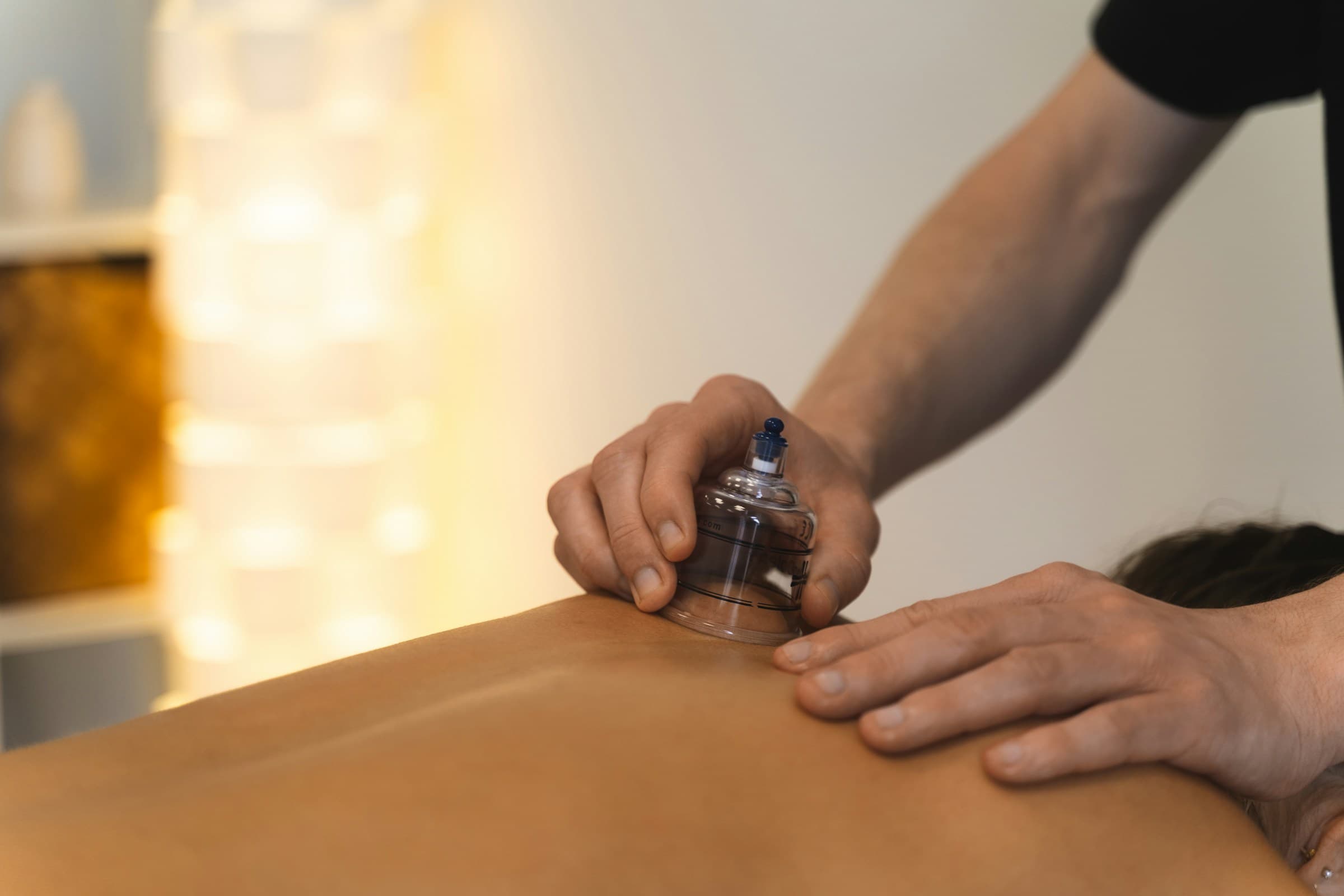
Cupping applies controlled negative pressure with glass or silicone cups so skin and superficial muscle lift gently into the cup. Static cupping holds cups in place for several minutes over trapezius, lumbar, or flank regions. Gliding (moving) cupping travels across oiled tissue to shear adhesions along the Bladder channel and other yang pathways. Patients often describe the sensation as deep but relieving — similar to massage pressure without aggressive compression. Circular cup marks (sha) commonly appear; in TCM they signal stagnant Blood and Qi being pulled outward. Marks typically fade within three to seven days and usually lighten as stagnation clears over a short series.
Search interest around fire cupping and wet cupping is high nationally. Susanna practices traditional dry cupping with modern hygiene standards. Fire cupping (brief flame to create vacuum in glass cups) is used when clinically appropriate with careful technique. Wet cupping (hijama-style bloodletting) is a different modality with different risk profiles; she does not market recreational wet cupping and will redirect patients when another approach — acupuncture, herbs, or medical referral — is safer. Clarity protects tissue and trust.
Pattern diagnosis drives every session. Cold-Damp obstruction, Blood stasis, and exterior Wind-Cold lodged in the muscular layer are classic cupping indications — common after humid Piedmont summers, warehouse labor, long US-74 or I-485 drives, and air-conditioning chill on tense necks. Contraindications include fragile or broken skin, certain anticoagulants, acute fever or infection, and pregnancy at stages where trunk cupping is inappropriate. Clean Needle Technique hygiene standards apply to cup equipment and skin prep.
Cupping pairs powerfully with acupuncture: needles regulate systemic Qi while cups address regional stagnation. Indian Trail patients with stress-related upper-back fixation, post-viral fatigue, or respiratory congestion with phlegm often feel immediate softening when both modalities share a visit. Susanna’s NCCAOM board certification and lineage study under Dr. Shao Jie Zhang since 2004 inform depth, duration, and when gua sha should replace or follow cups along bony contours. Compared with beauty-bar cupping, licensed TCM care explains marks, screens risks, and ties suction to a whole-person plan — which is why Charlotte-area patients routinely choose the short drive to Old Monroe Road Suite A.
Benefits
- Releases myofascial tension and improves local circulation for back, neck, and shoulder pain
- Encourages lymphatic clearing of metabolic stagnation after illness or overuse
- Complements acupuncture for sports injuries, commuter strain, and repetitive work injuries
- May ease respiratory congestion when Damp-Phlegm patterns affect the chest
- Provides immediate tissue relief many patients feel during the first session
- Integrates safely within full TCM diagnosis rather than isolated spot treatment
- Clear guidance on fire vs dry cupping and why wet cupping is not a casual spa service here
What to expect
- Assessment of skin integrity, pain location, and TCM pattern before cup application
- Application of cups to back, shoulders, or limbs; warmth or mild suction pressure at first contact
- Static hold or gliding movement for five to fifteen minutes depending on constitution
- Post-treatment hydration guidance; cup marks may appear and fade within three to seven days
- Combination with acupuncture in same visit when clinically appropriate
- Contraindication screening for pregnancy, anticoagulants, skin lesions, or acute fever
Frequently asked questions
Are cupping marks bruises?
Cup marks are petechiae from suction drawing stagnant blood to the surface — not traumatic bruising from blunt injury. They typically resolve within a week and lighten with each session as stagnation clears.
Do you offer fire cupping or wet cupping?
Susanna uses traditional dry cupping and, when appropriate, careful fire-cup vacuum technique. Wet cupping (bloodletting) is a separate modality she does not offer as a recreational service; she will advise if another approach fits better.
Does cupping replace acupuncture?
Cupping complements acupuncture. Susanna recommends combined or standalone cupping based on pattern diagnosis — systemic imbalance often still requires needle regulation.
Who should avoid cupping?
Patients with bleeding disorders, certain skin conditions, acute infection, or pregnancy at specific stages may need modified or avoided cupping. Susanna screens contraindications before treatment.
Is cupping available near Charlotte and Ballantyne?
Yes. The Indian Trail clinic is a short drive from south Charlotte neighborhoods including Ballantyne, Matthews, and Weddington. Many metro patients specifically seek licensed TCM cupping rather than spa-only suction.
Related care
- conditions
Pain Management
- conditions
Stress & Anxiety
- conditions
Sinusitis
- conditions
Preventive Care
- areas
Indian Trail acupuncture
- areas
Monroe acupuncture
- areas
Matthews acupuncture
- areas
Cupping therapy in Indian Trail
- areas
Cupping therapy for Charlotte patients
- areas
Cupping near Ballantyne
- eeat
About Susanna Yeung